Introduction
Content creation has changed dramatically over the past few years. What once took hours—or even days—can now be done in minutes thanks to artificial intelligence. Whether you’re a blogger, marketer, business owner, or student, AI writing tools are quickly becoming essential for producing high-quality content at scale.
But with so many tools available, choosing the right one can feel overwhelming. Some focus on SEO optimization, others excel at creative writing, and a few offer complete content workflows.
In this guide, we’ll break down the best AI tools for content writing in 2026, comparing their features, pricing, pros, and ideal use cases. By the end, you’ll know exactly which tool fits your needs—and budget.
Best AI Tools for Content Writing in 2026
What Are AI Content Writing Tools?
AI content writing tools are advanced software applications powered by artificial intelligence and large language models that can generate, edit, rewrite, and optimize written content. These tools use technologies like natural language processing (NLP) and machine learning to understand user input (prompts) and produce human-like text in seconds.
They are designed to assist with a wide range of writing tasks, including blog posts, articles, social media content, emails, product descriptions, and more. By analyzing vast amounts of data, AI tools can mimic different writing styles, tones, and formats, making them highly versatile for both personal and professional use.
In addition to content generation, many AI writing tools also offer features like grammar checking, tone adjustment, keyword optimization, and content structuring. This makes them especially useful for improving productivity, maintaining consistency, and creating SEO-friendly content.
Overall, AI writing tools act as smart assistants that help users save time, overcome writer’s block, and produce high-quality content more efficiently.
How They Work
Most AI writing tools are trained on massive datasets and use machine learning to predict and generate text. You simply provide a prompt—like “Write a blog intro about fitness”—and the AI produces relevant content instantly.
Key Benefits
- Speed: Generate content in seconds
- Productivity: Write more in less time
- Idea Generation: Overcome writer’s block
- SEO Optimization: Built-in keyword tools
- Cost Savings: Reduce reliance on large writing teams
Key Features to Look for in AI Writing Tools
When choosing an AI writing tool, focus on features that directly impact your content quality and workflow. Look for tools that offer accurate and natural writing, SEO optimization capabilities, easy-to-use interfaces, tone and style customization, and useful integrations with platforms like Google Docs or WordPress. Pricing and overall value should also align with your needs, whether you’re a beginner or a professional content creator.
Before diving into the best tools, here are the most important features to consider:
1. Content Quality
Look for tools that produce natural, coherent, and engaging writing—not robotic text.
2. SEO Capabilities
Some tools include keyword suggestions, SERP analysis, and optimization features.
3. Ease of Use
A clean interface and simple workflow can save a lot of time.
4. Customization
The ability to control tone, voice, and style is crucial for branding.
5. Integrations
Support for platforms like WordPress, Google Docs, or Notion is a big plus.
6. Pricing
Choose a tool that offers value for your specific needs.
Best AI Tools for Content Writing (2026)
In 2026, AI writing tools have become smarter, faster, and more efficient, helping users create high-quality content with ease. From blog writing and SEO optimization to social media and marketing copy, the best tools offer powerful features tailored to different needs. Choosing the right one depends on your goals, budget, and the type of content you want to produce.
1. ChatGPT – Best Overall AI Writing Tool
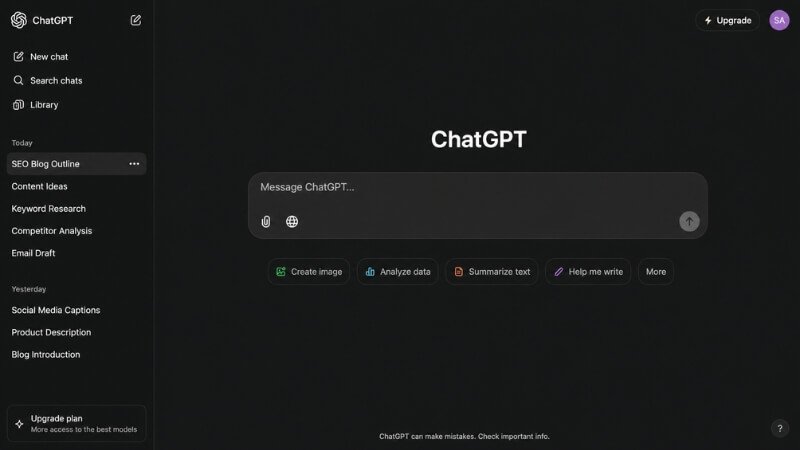
ChatGPT remains one of the most versatile AI writing tools available. It can handle everything from blog posts and emails to scripts and technical writing. ChatGPT is a powerful, all-in-one AI writing tool that can generate high-quality content, brainstorm ideas, and edit text with ease. It uses advanced language models to produce natural, human-like writing and can handle everything from blog posts to emails and scripts, making it ideal for both beginners and professionals.
Key Features:
- Long-form content generation
- Idea brainstorming
- Conversational tone control
- Multi-purpose use
Pros:
- Highly flexible
- Produces natural-sounding content
- Constant updates and improvements
Cons:
- Requires good prompts for best results
- Limited built-in SEO tools
👉 Ideal for users who want a powerful all-in-one writing assistant.
Best for: Bloggers, marketers, general content creation
2. Jasper AI – Best for Marketing Teams
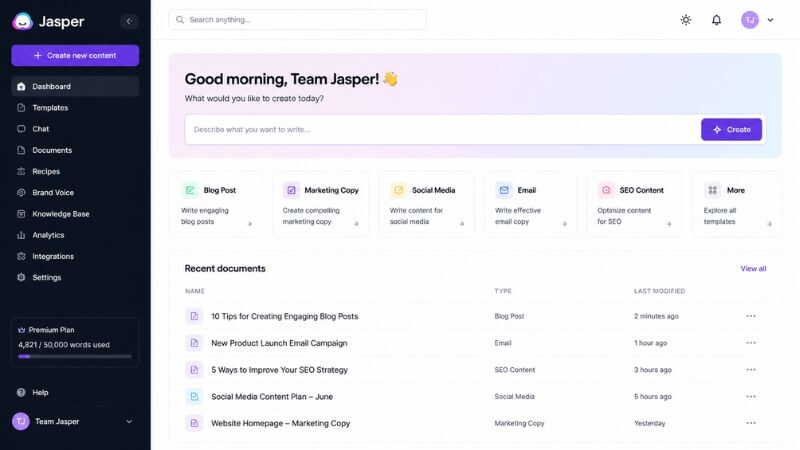
Jasper AI is designed specifically for marketing workflows, offering templates and brand voice consistency. Jasper AI is designed specifically for marketing teams, offering advanced features like brand voice control, campaign templates, and collaborative workflows. It helps businesses create consistent, high-quality marketing content at scale, making it ideal for agencies and growing teams.
Key Features:
- Pre-built marketing templates
- Brand voice memory
- Campaign tools
Pros:
- Great for team collaboration
- Consistent brand tone
- High-quality outputs
Cons:
- Expensive compared to others
- Learning curve for beginners
👉 Best choice for scaling content across teams.
Best for: Agencies, businesses, marketing teams
3. Copy.ai – Best for Short-Form Content
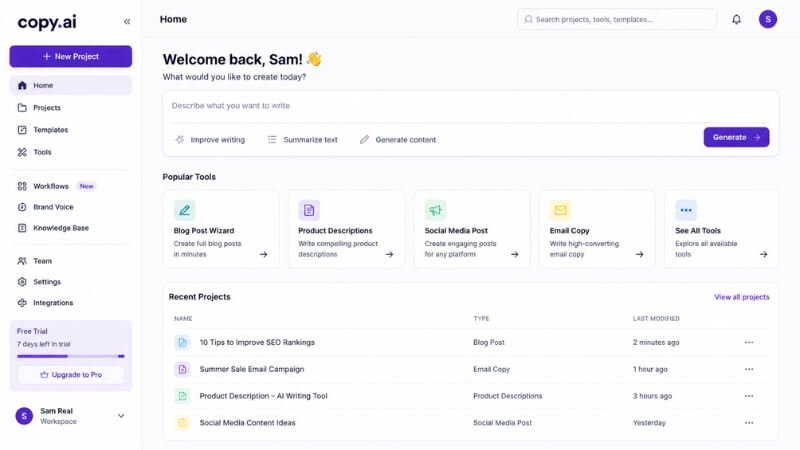
Copy.ai excels at generating quick, engaging short-form content. Copy.ai is a user-friendly AI writing tool ideal for creating short-form content like social media posts, ad copy, and product descriptions. It offers quick, creative outputs with minimal effort, making it a great choice for marketers and beginners looking to generate engaging content fast.
Key Features:
- Social media captions
- Ad copy generation
- Product descriptions
Pros:
- Fast and easy to use
- Great for beginners
- Strong creative outputs
Cons:
- Not ideal for long-form blogs
- Limited advanced SEO tools
👉 Perfect for social media marketers and eCommerce.
Best for: Social media, ads, product descriptions
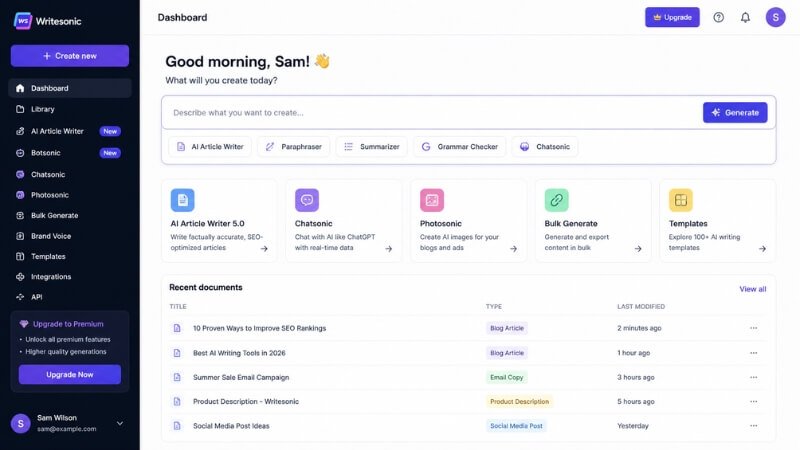
4. Writesonic – Best for SEO Content
Writesonic is a strong competitor in the SEO space, offering tools for blog generation and optimization. Writesonic is a powerful AI writing tool built for creating SEO-optimized content quickly and efficiently. It offers features like keyword research, content optimization, and AI-generated blog writing, helping users produce search-friendly articles and rank higher on Google.
Key Features:
- AI blog writer
- SEO integrations
- Content templates
Pros:
- SEO-focused features
- Affordable pricing
- Easy to use
Cons:
- Output may require editing
- Less creative flexibility
👉 Great for ranking blog content faster.
Best for: Bloggers and SEO professionals
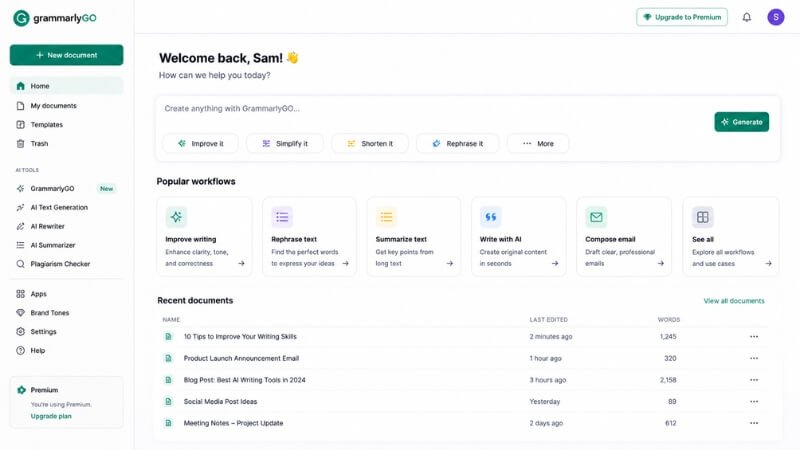
5. GrammarlyGO – Best for Editing & Rewriting
GrammarlyGO combines grammar checking with AI writing assistance. GrammarlyGO is an AI-powered writing assistant focused on editing, rewriting, and improving content clarity. It helps users refine grammar, adjust tone, summarize text, and generate drafts, making writing more polished and professional across emails, documents, and more.
Key Features:
- Grammar correction
- Tone adjustment
- Sentence rewriting
Pros:
- Improves clarity and tone
- Easy integration
- Reliable editing
Cons:
- Not a full content generator
- Limited long-form capabilities
👉 Best for refining existing content.
Best for: Editing, rewriting, polishing content
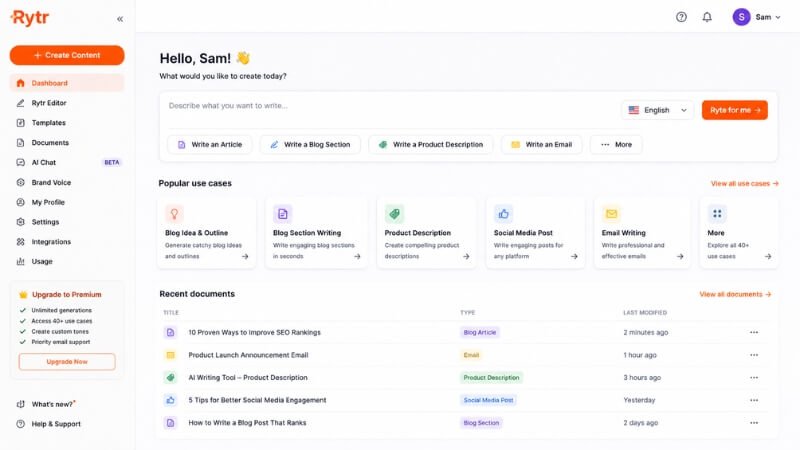
6. Rytr – Best Budget Option
Rytr is one of the most affordable AI writing tools available. Rytr is an affordable AI writing tool that helps users create content quickly without breaking the budget. It offers a simple interface, multiple tone options, and supports various content types, making it a great choice for beginners and freelancers looking for cost-effective writing assistance.
Key Features:
- Multiple writing tones
- Simple interface
- Quick outputs
Pros:
- Very affordable
- Easy to learn
- Good for basic tasks
Cons:
- Limited advanced features
- Lower output quality compared to premium tools
👉 Ideal for users on a tight budget.
Best for: Beginners and freelancers
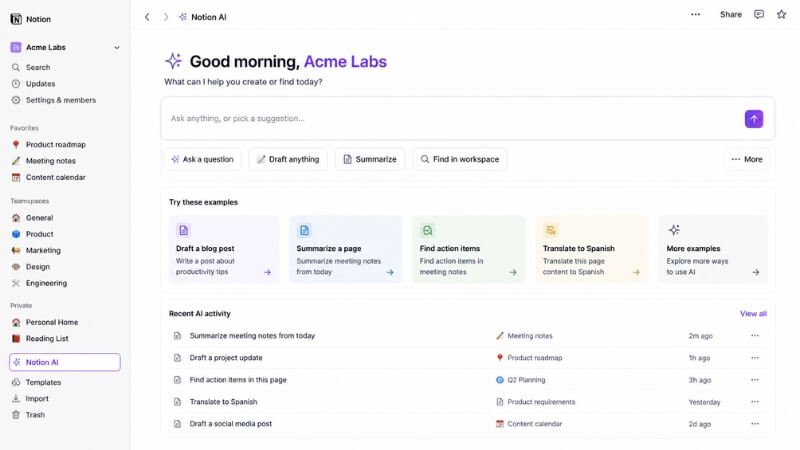
7. Notion AI – Best for Productivity Integration
Notion AI integrates writing directly into your workspace. Notion AI seamlessly integrates writing assistance into your workspace, allowing you to create, edit, and organize content without switching tools. It’s ideal for teams and individuals who want to combine note-taking, task management, and AI-powered writing in one place.
Key Features:
- Note-taking + AI writing
- Task management
- Collaboration tools
Pros:
- Seamless workflow integration
- Great for teams
- Organized content creation
Cons:
- Not specialized for SEO
- Limited standalone writing features
👉 Perfect for all-in-one productivity.
Best for: Teams and productivity-focused users
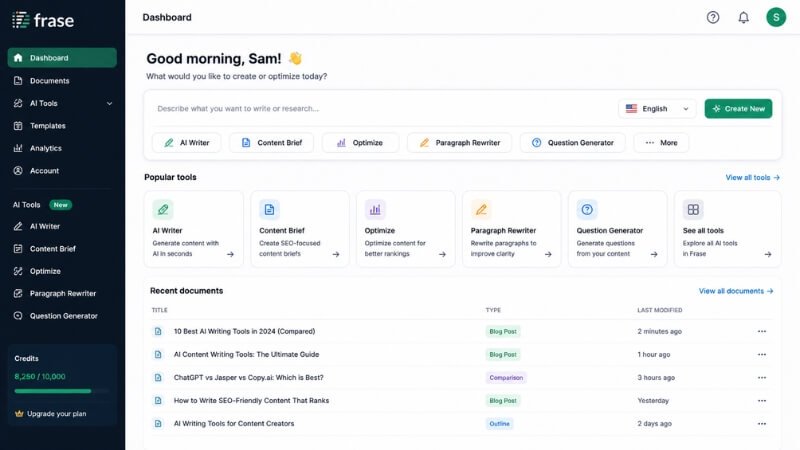
8. Frase – Best for SEO Research & Content Briefs
Frase helps you research, outline, and optimize content for search engines. Frase is an AI-powered tool focused on SEO research and content optimization. It helps users create data-driven content briefs, analyze search results, and optimize articles for better rankings, making it ideal for bloggers and SEO professionals.
Key Features:
- SERP analysis
- Content briefs
- Optimization tools
Pros:
- Strong SEO insights
- Data-driven content
- Improves rankings
Cons:
- Requires SEO knowledge
- Not beginner-friendly
👉 Best for serious SEO-focused content creators.
Best for: SEO professionals and content strategists
| Tool | Best For | Pricing | SEO Features | Ease of Use |
|---|---|---|---|---|
| ChatGPT | All-purpose | Free/Paid | Medium | Easy |
| Jasper AI | Marketing teams | Paid | High | Medium |
| Copy.ai | Short-form | Free/Paid | Low | Easy |
| Writesonic | SEO blogs | Paid | High | Easy |
| GrammarlyGO | Editing | Free/Paid | Low | Very Easy |
| Rytr | Budget users | Low-cost | Low | Easy |
| Notion AI | Productivity | Paid | Low | Easy |
| Frase | SEO research | Paid | Very High | Medium |
Free vs Paid AI Writing Tools
Free vs Paid AI Writing Tools
Free AI writing tools are great for beginners and basic tasks, offering limited features and usage without any cost. In contrast, paid tools provide more advanced capabilities like better content quality, higher usage limits, faster performance, and SEO optimization features, making them more suitable for professionals and businesses.
Free Tools
Pros:
- No cost
- Good for beginners
Cons:
- Limited features
- Lower output quality
- Paid Tools
Pros:
- Advanced features
- Better performance
- Higher-quality content
Cons:
- Monthly cost
Paid Tools
Pros:
- Advanced features (SEO tools, templates, integrations)
- Better content quality and accuracy
- Higher usage limits and faster performance
- Priority support and regular updates
Cons:
- Monthly or yearly subscription cost
- Some tools can be expensive for beginners
👉 Recommendation: Start free, upgrade when needed.
How to Choose the Best AI Writing Tool
Choosing the best AI writing tool depends on your specific needs, budget, and content goals. Whether you’re creating blogs, marketing copy, or SEO content, it’s important to consider features like ease of use, content quality, customization options, and pricing to find the right fit for your workflow.
Based on Your Needs
- Bloggers: ChatGPT, Writesonic
- Marketers: Jasper AI, Copy.ai
- SEO Experts: Frase, Writesonic
- Students: Rytr, ChatGPT
Based on Budget
- Low budget → Rytr
- Mid-range → Writesonic
- Premium → Jasper
Based on Content Type
- Long-form → ChatGPT
- Short-form → Copy.ai
- SEO → Frase
Use Cases of AI Writing Tools
AI writing tools can be used for a wide range of content creation tasks, including blog writing, SEO articles, social media posts, email marketing, and product descriptions. They help save time, boost productivity, and make it easier to generate high-quality content for different platforms and audiences.
1. Blog Writing
Generate full blog posts quickly.
2. SEO Content
Optimize articles for ranking.
3. Social Media
Create captions, tweets, and posts.
4. Email Marketing
Write newsletters and campaigns.
5. Product Descriptions
Generate eCommerce content at scale.
Pros and Cons of AI Writing Tools
AI writing tools offer major advantages like faster content creation, improved productivity, and idea generation. However, they also have limitations, such as occasional inaccuracies, lack of human creativity, and the need for editing to ensure quality and originality.
Advantages
- Faster content creation
- Scalable production
- Idea generation
Limitations
- May produce inaccuracies
- Requires editing
- Lacks human emotion
Are AI Writing Tools Good for SEO?
Yes—but only if used correctly. AI writing tools can be effective for SEO when used properly, as they help generate optimized content, suggest keywords, and improve structure. However, to rank well on search engines, the content must be edited, fact-checked, and enhanced with human insight to ensure quality and relevance.
Google prioritizes high-quality, helpful content, regardless of whether it’s AI-generated or human-written.
Best Practices:
- Edit and fact-check AI content
- Add personal insights
- Focus on user intent
- Avoid spammy automation
Tips for Using AI Writing Tools Effectively
To get the best results from AI writing tools, use clear and specific prompts, review and edit the generated content, and add your own insights to make it more valuable. Combining AI efficiency with human creativity ensures high-quality, engaging, and SEO-friendly content.
- Use clear, detailed prompts
- Always edit the output
- Add your unique voice
- Combine multiple tools
- Optimize manually for SEO
- Future of AI in Content Writing
AI is only getting smarter. Expect:
- Better personalization
- Real-time SEO optimization
- Multimodal content (text + images + video)
- Fully automated workflows
FAQs
What is the best AI tool for content writing?
ChatGPT is the best all-around tool due to its flexibility and quality.
Are AI writing tools free?
Some offer free plans, but advanced features require paid subscriptions.
Can AI replace human writers?
No—AI enhances productivity but still needs human creativity and oversight.
Is AI content good for SEO?
Yes, if it’s high-quality, original, and helpful.
Which AI tool is best for beginners?
Rytr and Copy.ai are great starting points.
Do AI writing tools check for plagiarism?
Some AI writing tools include built-in plagiarism checkers, while others require third-party integrations. It’s always recommended to verify originality before publishing.
Can AI writing tools write long-form blog posts?
Yes, many AI tools like ChatGPT and Writesonic can generate long-form content, but human editing is necessary to improve structure, accuracy, and engagement.
Are AI writing tools safe to use?
Most reputable AI tools are safe, but users should avoid sharing sensitive or confidential information while using them.
Do AI tools support multiple languages?
Yes, many AI writing tools support multiple languages, allowing users to create content for global audiences.
How accurate is AI-generated content?
AI-generated content is generally accurate but can sometimes include errors or outdated information, so fact-checking is essential before publishing.
Best AI Tools for Blogging in 2026
How to Use ChatGPT for Blogging: A Complete Guide for Beginners & Pros
How to Use AI for Productivity at Work (2026 Guide + Best Tools)
Best Free AI Tools for Students in 2026
Conclusion
AI writing tools have revolutionized content creation, making it faster, easier, and more scalable than ever before. Whether you’re a solo blogger, freelancer, student, or part of a large marketing team, there’s an AI tool tailored to your specific needs and workflow.
From generating blog posts and social media content to optimizing for SEO and improving writing quality, these tools can significantly boost productivity and help you stay competitive in today’s fast-paced digital landscape. However, it’s important to remember that AI works best as a support tool, not a complete replacement for human creativity. Adding your own insights, editing carefully, and maintaining your unique voice will always be key to creating high-quality content.
As AI technology continues to evolve, we can expect even more powerful features, better accuracy, and deeper integrations into everyday workflows. The future of content writing is a blend of human creativity and AI efficiency—and those who learn to use both effectively will have a major advantage.
👉 Final Tip: Start with one tool that fits your needs, experiment with it, and gradually build a workflow that combines AI assistance with your personal expertise.